Salary as per section 17(1): meaning, Form 16 line 1(a) and the new section 16
What the Income-tax Act counts as salary under section 17(1), where the figure sits in Form 16 and your ITR, how it differs from perquisites (17(2)) and profits in lieu (17(3)), a worked CTC example, pension and family pension, and the renumbering to section 16 of the Income-tax Act, 2025.
Salary as per section 17(1) is the gross salary paid to you in money: basic pay, dearness allowance, HRA and every other allowance, bonus, commission, pension, gratuity, leave encashment and any salary advance, before any exemption or deduction. Section 17(1) of the Income-tax Act, 1961 defines it, Form 16 reports it at item 1(a), and the same figure is “Salary as per section 17(1)” in your ITR. From tax year 2026-27 the definition sits in section 16 of the Income-tax Act, 2025, with the same list.
The number is larger than your take-home and usually larger than your taxable salary, because exempt allowances (section 10), the standard deduction and professional tax (section 16) are subtracted after it. Perquisites and profits in lieu of salary are not in it: they are the next two lines, 17(2) and 17(3). We checked the wording of both Acts and of Form 16 on 30 October 2026; the screenshots below are from that day.
- Means: wages, annuity or pension, gratuity, fees and commission, salary advance, leave encashment, taxable PF accretions, employer NPS contribution
- Where: Form 16 Part B, item 1(a) “Salary as per provisions contained in section 17(1)”; ITR Schedule Salary; AIS
- Not in it: perquisites (17(2), item 1(b)) and profits in lieu of salary (17(3), item 1(c)); employer PF contribution up to 12%
- Before: section 10 exemptions (HRA, LTA), standard deduction (₹75,000 new regime, ₹50,000 old) and professional tax
- Pension: yes, 17(1)(ii); family pension is not (income from other sources)
- 2025 Act: 17(1) → section 16; 17(2) → 17; 17(3) → 18; Form 16 → Form 130 from tax year 2026-27
- FY 2025-26 returns (filed in 2026): still use section 17(1) and Form 16
What does salary as per section 17(1) include?
Salary as per section 17(1) includes eight kinds of payment, listed in the Act itself. Section 17(1) opens “Salary includes”, so the list is inclusive, and anything paid for the employment in money falls in it even if it has another name on the payslip. The Act’s words:
— Section 17(1), Income-tax Act, 1961
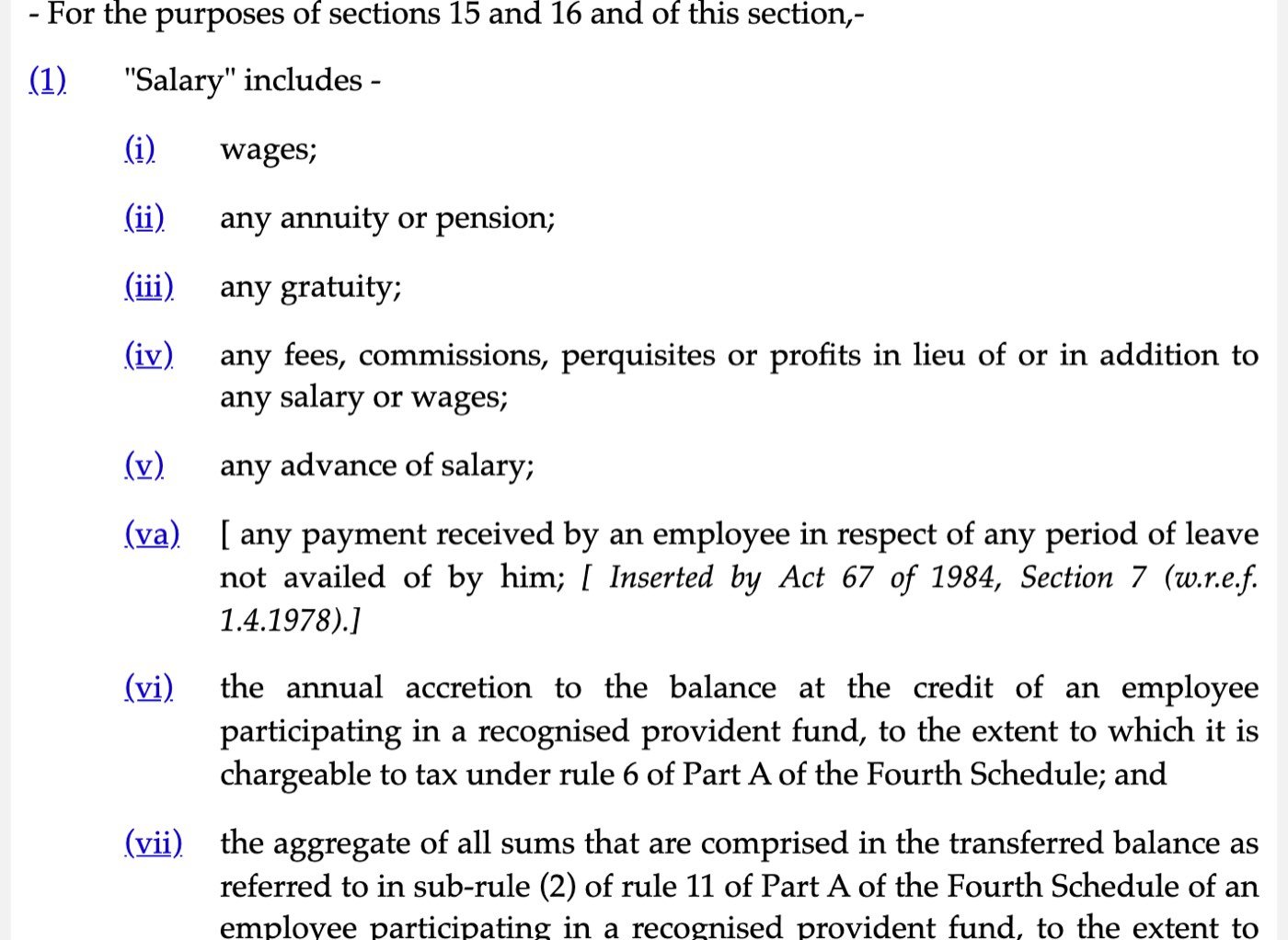
What each clause covers in a normal payslip, with its letter in section 16 of the 2025 Act:
| 1961 Act, s.17(1) | What it covers | 2025 Act, s.16 | In practice |
|---|---|---|---|
| (i) | Wages | (a) | Basic pay, dearness allowance and every allowance paid in money: HRA, special allowance, conveyance, bonus, overtime |
| (ii) | Any annuity or pension | (b) | Pension from a former employer, and an annuity bought by the employer |
| (iii) | Any gratuity | (c) | The amount received; the exempt part under section 10(10) is deducted at item 2(b) of Form 16 |
| (iv) | Any fees, commissions, perquisites or profits in lieu of or in addition to any salary or wages | (d), (e), (f) | Sales commission, incentive pay; perquisites and profits in lieu are reported separately in Form 16 at 1(b) and 1(c) |
| (v) | Any advance of salary | (g) | Taxed in the year received, not again when it falls due |
| (va) | Payment for leave not availed (leave encashment) | (h) | The exempt part under section 10(10AA) is deducted at item 2(d) |
| (vi), (vii) | Taxable accretions and transferred balance in a recognised provident fund | (i), (j) | Employer PF above 12% of salary, and interest above the notified rate |
| (viii) | Employer’s contribution to the NPS account under section 80CCD | (k) | Shown in 17(1), then deducted under 80CCD(2) (section 124 of the 2025 Act) |
| — | — | (l) | New: Central Government contribution to an Agniveer Corpus Fund account |
Two things are not in 17(1) even though they appear in your CTC: the employer’s own provident-fund contribution (not salary; only the part above 12% of salary is taxed, through clause (vi), and the part above ₹7.5 lakh a year across PF, NPS and superannuation is a perquisite) and reimbursements of actual expenses incurred for the employer’s work. Gifts and benefits in kind are perquisites under 17(2).
Where to find details of salary as per section 17(1)?
Details of salary as per section 17(1) are in Part B of your Form 16, at item 1(a), the first line under “Gross Salary”. Form 16 is the TDS certificate your employer must give you by 15 June after the financial year. The same figure appears in three other places:
- Form 16, Part B, item 1(a): “Salary as per provisions contained in section 17(1)”, with perquisites at 1(b), profits in lieu at 1(c) and the total at 1(d). If you changed jobs, the previous employer’s salary is at 1(e).
- Your ITR: Schedule Salary in ITR-1 and ITR-2 has the line “Salary as per section 17(1)”, pre-filled from the employer’s Form 24Q statement. ITR-2 asks for the break-up by nature (basic, DA, HRA, and so on).
- AIS and TIS: the Annual Information Statement on the e-filing portal shows the salary your employer reported, which is the 17(1) figure plus perquisites and profits in lieu.
- Salary slips: add the gross of all twelve months (basic + DA + HRA + all allowances + bonus + arrears), before deductions. It should match 1(a) if there were no perquisites.
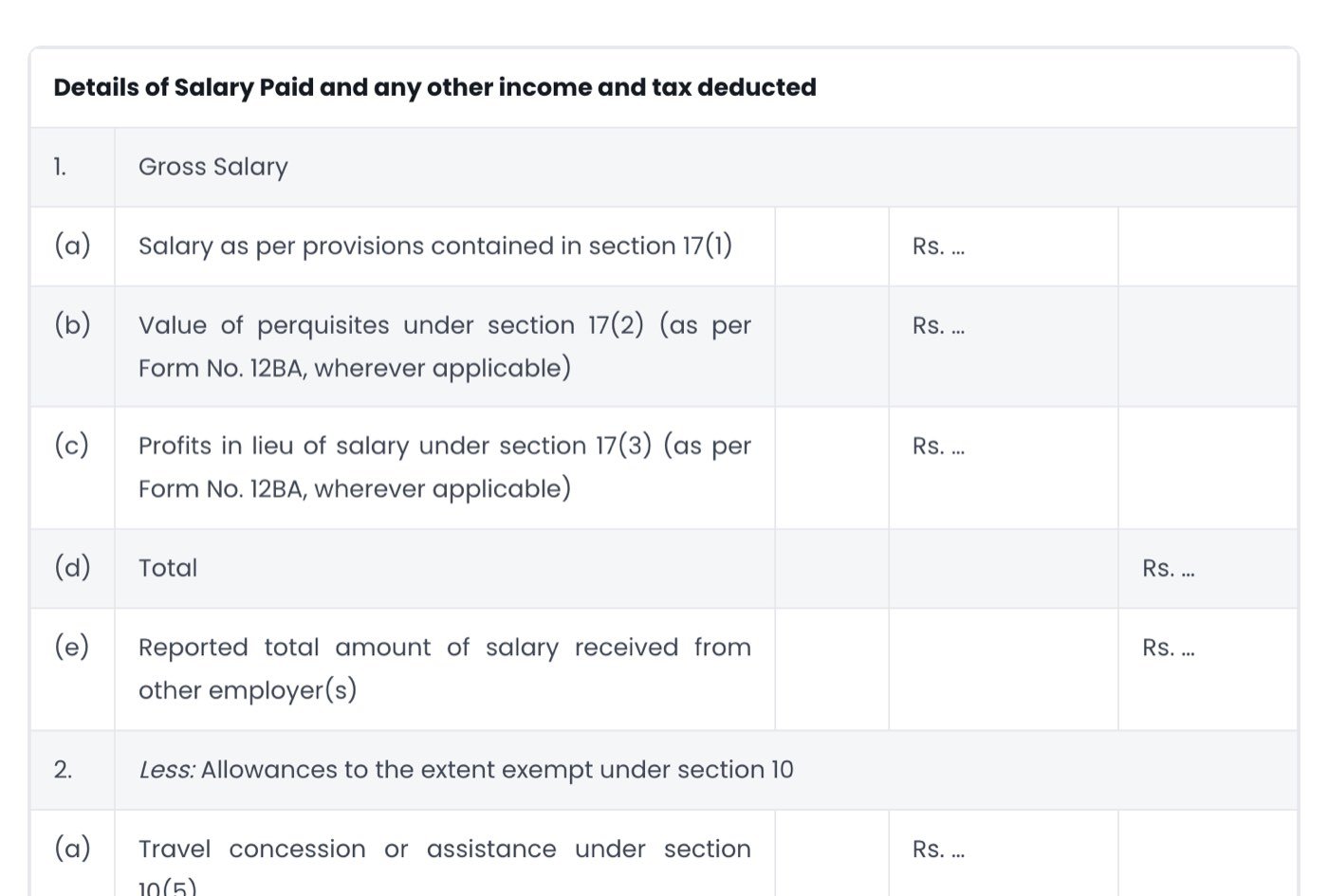
For FY 2025-26, the return you file in 2026, you still receive Form 16 and the ITR still says section 17(1). From tax year 2026-27 the certificate is Form 130 (Rule 215 of the Income-tax Rules, 2026), whose Part C, Annexure I, carries the same salary computation under the new section numbers.
How is 17(1) different from 17(2) and 17(3)?
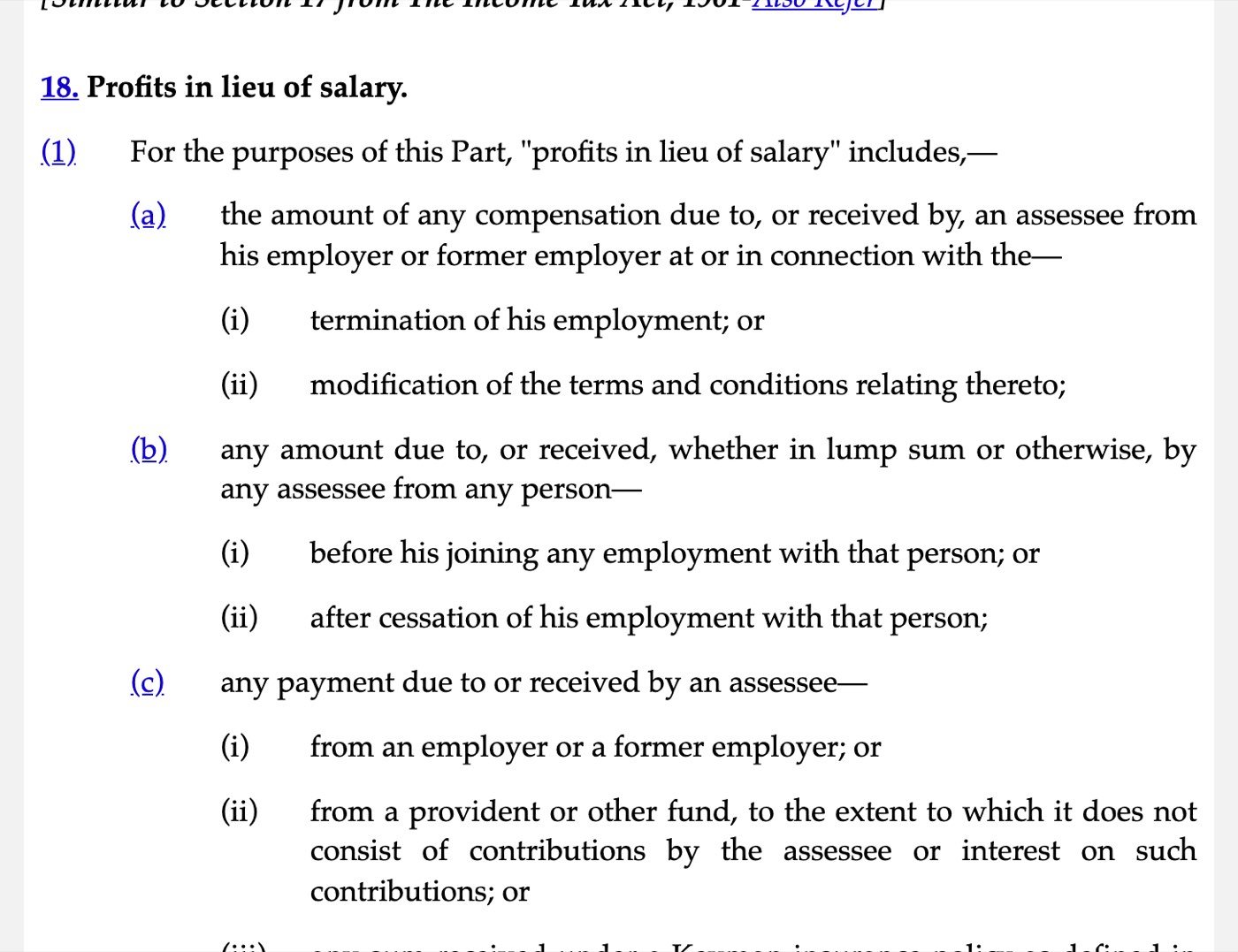
Section 17(1) is salary paid in money, section 17(2) is perquisites (benefits in kind or paid for by the employer) and section 17(3) is profits in lieu of salary (lump sums connected with the job, such as termination compensation). Form 16 keeps them on three lines because perquisites need a separate valuation statement, Form 12BA, and profits in lieu can qualify for relief under section 89.
| Line | What goes in | Where it is reported | 2025 Act |
|---|---|---|---|
| 17(1) Salary | Money paid for the job: wages, allowances, bonus, commission, pension, gratuity, leave encashment, salary advance, employer NPS | Form 16 item 1(a); ITR “Salary as per section 17(1)” | Section 16 |
| 17(2) Perquisites | Benefits in kind or paid for by the employer: rent-free or concessional accommodation, company car, interest-free loans, ESOPs, employer PF/NPS/superannuation above ₹7.5 lakh a year | Form 16 item 1(b), detailed in Form 12BA | Section 17 |
| 17(3) Profits in lieu of salary | Lump sums connected to the job rather than for it: termination compensation, joining bonus, payments before joining or after leaving, unrecognised PF payouts, Keyman insurance proceeds | Form 16 item 1(c), detailed in Form 12BA | Section 18 |
How to calculate salary as per section 17(1)?
To calculate salary as per section 17(1), add every component paid to you in money during the year, before any exemption, deduction or TDS, and leave out the employer’s PF contribution and benefits in kind. For a CTC of ₹12,00,000 with a common private-sector structure:
| Component | Amount a year | In section 17(1)? |
|---|---|---|
| Basic salary | ₹5,40,000 | Yes, 17(1)(i) wages |
| House rent allowance | ₹2,16,000 | Yes, in full; any HRA exemption is deducted later at item 2(e) |
| Special allowance | ₹3,79,200 | Yes, 17(1)(iv): paid in addition to wages |
| Employer’s PF contribution (12% of basic) | ₹64,800 | No, not salary (only the part above ₹7.5 lakh a year is taxed, as a perquisite) |
| Salary as per section 17(1) | ₹11,35,200 | Form 16, Part B, item 1(a) |
So the Form 16 line 1(a) for this employee is ₹11,35,200, not the CTC of ₹12,00,000 and not the taxable salary. Taxable salary comes after HRA exemption (old regime only), the standard deduction of ₹75,000 in the new regime or ₹50,000 in the old, and professional tax. The salary calculator runs the full chain from CTC to in-hand, and the HRA calculator gives the exempt HRA that is deducted at item 2(e).
Three details that change the figure:
- Arrears and advance: salary is taxed when due or when paid, whichever is earlier (section 15), so arrears paid this year are in this year’s 17(1). Relief under section 89 (section 157 of the 2025 Act) is claimed separately through Form 10E.
- Gratuity and leave encashment: the full amount received is in 17(1); the exempt part (gratuity up to ₹20 lakh under the Payment of Gratuity Act, leave encashment up to ₹25 lakh for non-government employees) is shown as a deduction at item 2.
- Employer NPS contribution: included in 17(1) under clause (viii), then deducted under section 80CCD(2) (up to 14% of basic plus DA in the new regime, 10% in the old; section 124 of the 2025 Act).
Is pension covered under section 17(1)?
Yes. Pension is covered under section 17(1), which lists “any annuity or pension” at clause (ii), so a retiree’s uncommuted monthly pension is salary income, taxed under the head “Salaries” with the standard deduction. Section 16(b) of the 2025 Act repeats the words. Three related payments are treated differently:
- Commuted pension (a lump sum in place of part of the pension) is in 17(1) but exempt under section 10(10A): fully for government employees, and one-third or one-half of the full pension value for others, depending on whether gratuity was also received.
- Family pension, paid to a spouse or child after the employee’s death, is not salary. It is income from other sources, with a deduction of one-third of the pension or ₹25,000 (whichever is less) in the new regime and ₹15,000 in the old (section 57(iia) of the 1961 Act, section 93(1)(d) of the 2025 Act).
- Annuity from an insurer or NPS after retirement is taxed as salary only if it comes from the employer’s arrangement; an annuity you bought yourself is income from other sources.
What is salary as per section 17(1) in ITR?
In the ITR, “salary as per section 17(1)” is the first line of Schedule Salary, and it should equal item 1(a) of Form 16, or the sum of 1(a) across employers if you changed jobs. The e-filing portal pre-fills it from the TDS statement (Form 24Q) your employer filed, which is also what the AIS shows. Check three things before you confirm it:
- Match Form 16: if the pre-filled figure differs from 1(a), use Form 16 and ask the employer to revise the TDS statement; a mismatch can trigger a notice.
- Two employers: enter each employer separately; ITR-1 allows one employer row for the current employer and asks for the previous one through 1(e), ITR-2 takes several.
- Exemptions go on their own lines: HRA, LTA, gratuity and leave encashment exemptions are entered under section 10, not netted out of the 17(1) figure. Entering a net figure understates gross salary and overstates the exemption.
ITR-2 and ITR-3 also ask for the nature of the 17(1) salary: basic, dearness allowance, HRA, other allowances, and the employer’s NPS contribution each on its own row. The totals must agree with the 17(1) line.
What changed under the Income-tax Act, 2025?
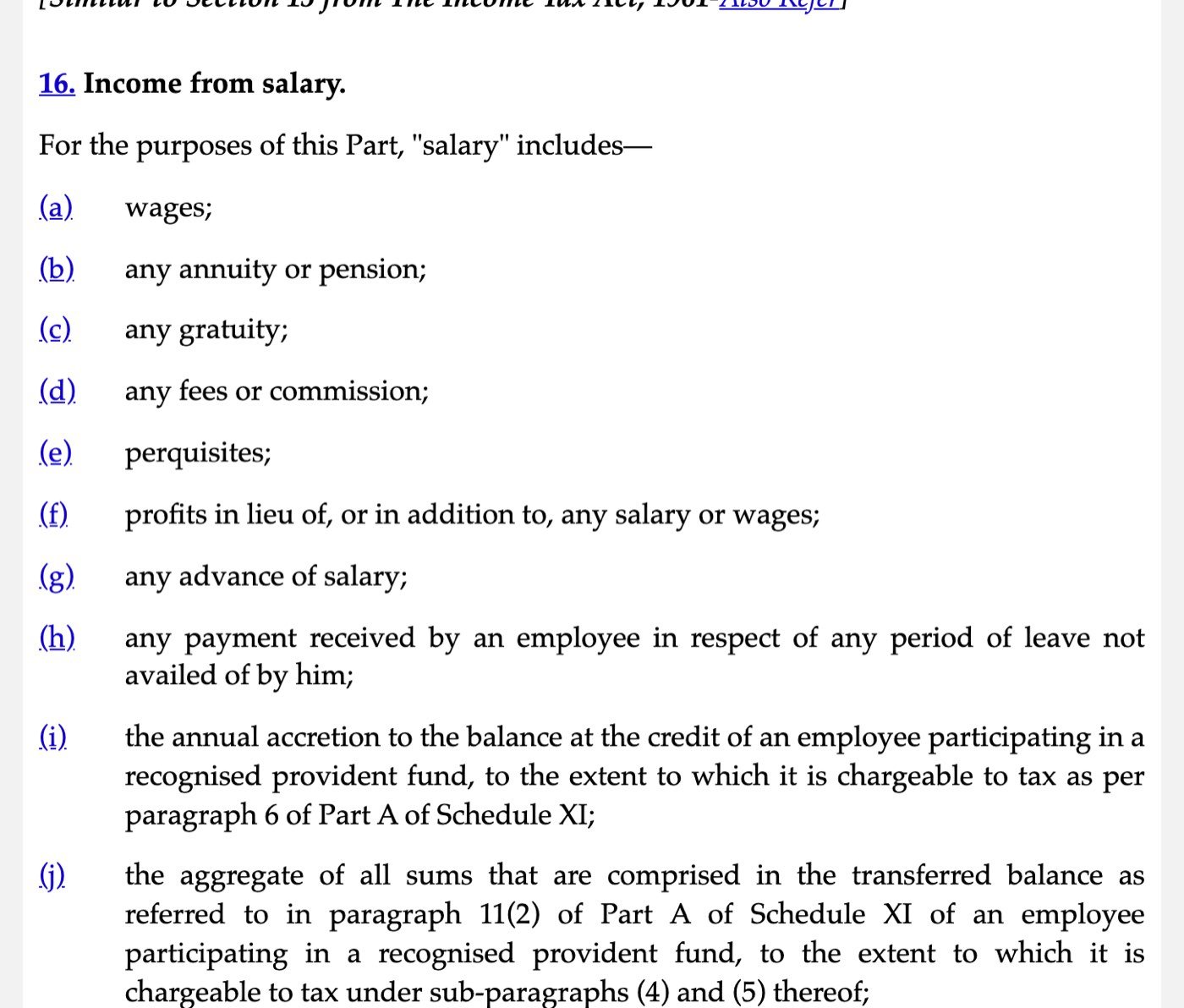
The Income-tax Act, 2025 moved the definition of salary from section 17(1) to section 16, with the same list of items plus one new clause, and it applies to income from 1 April 2026 (tax year 2026-27). The words “salary as per section 17(1)” stay on every Form 16 and ITR for FY 2025-26 and earlier; the Form 130 and ITR forms for tax year 2026-27 will refer to section 16 instead.
| Provision | Income-tax Act, 1961 | Income-tax Act, 2025 |
|---|---|---|
| Charge on salary income | Section 15 | Section 15 |
| Definition of “salary” (the Form 16 line 1(a) figure) | Section 17(1) | Section 16 |
| Definition of “perquisite” | Section 17(2) | Section 17 |
| Definition of “profits in lieu of salary” | Section 17(3) | Section 18 |
| Standard deduction, professional tax | Section 16(ia), 16(iii) | Section 19 (Table, Sl. 2 and 1) |
| Exempt allowances (HRA, LTA, gratuity, leave encashment) | Section 10 | Schedule II and III |
| Family pension deduction | Section 57(iia) | Section 93(1)(d) |
| Employer NPS contribution deduction | Section 80CCD(2) | Section 124 |
| Salary TDS certificate | Form 16 (Part A, Part B) | Form 130 (Parts A, B, C with Annexures I and II) |
| Period | Up to FY 2025-26 (AY 2026-27) | Tax year 2026-27 onwards |
Three substantive differences, beyond the numbering: clause (l) of section 16 adds the Central Government’s contribution to an Agniveer Corpus Fund account; the exemptions that were in section 10 (HRA, gratuity, leave encashment, commuted pension) move into Schedules II and III; and the year is called a tax year, so there is no separate assessment year. Our TDS rate chart and TRACES guide map the other renumbered sections and forms.
What is level 17 salary?
“Level 17 salary” is a different thing from section 17(1): it is pay level 17 of the 7th Central Pay Commission matrix, a fixed basic pay of ₹2,25,000 a month, the apex scale for Secretaries to the Government of India and equivalent posts. Google shows the question next to this one because both contain “17”. The top of the matrix (gazette notification of 25 July 2016):
| 7th CPC pay level | Basic pay (first cell) |
|---|---|
| Level 13A | ₹1,31,100 |
| Level 14 | ₹1,44,200 |
| Level 15 | ₹1,82,200 |
| Level 16 | ₹2,05,400 |
| Level 17 | ₹2,25,000 (fixed) |
| Level 18 | ₹2,50,000 (fixed) |
Levels 17 and 18 have a single cell, so there are no annual increments; dearness allowance (60% from 1 January 2026) and HRA are paid on top. For a Level 17 officer the whole basic pay, DA and allowances are salary as per section 17(1) of the Income-tax Act, like anyone else’s. See the government salary pages for the full matrix in practice.
Is 50% basic salary mandatory?
No. Neither the Income-tax Act nor the labour codes say basic salary must be 50% of CTC. The rule people mean is section 2(y) of the Code on Wages, 2019, in force since 21 November 2025, which defines “wages” as basic pay, dearness allowance and retaining allowance, and then says that if the excluded components (HRA, conveyance, overtime, commission, bonus, employer PF and so on, clauses (a) to (i)) exceed one-half of all remuneration, the excess is deemed to be wages. So “wages” for PF, gratuity and bonus is at least half of total pay, whatever the payslip calls the parts.
For section 17(1) the split does not matter: basic, HRA and special allowance are all in the 17(1) figure. The 50% rule changes what counts as wages for the employer’s PF contribution, gratuity and leave encashment, which can raise those (and lower take-home) when allowances were more than half of pay. The salary slip guide shows the usual structure.
सेक्शन 17(1) के अनुसार सैलरी क्या है?
सेक्शन 17(1) के अनुसार सैलरी आपकी सकल (ग्रॉस) सैलरी है, जो पैसे में दी जाती है: बेसिक, महंगाई भत्ता, HRA और बाकी सभी भत्ते, बोनस, कमीशन, पेंशन, ग्रेच्युटी, छुट्टी का नकदीकरण और सैलरी एडवांस, किसी भी छूट या कटौती से पहले। यह आंकड़ा फ़ॉर्म 16 के पार्ट B में आइटम 1(a) पर और ITR में “Salary as per section 17(1)” लाइन में दिखता है। पर्क्विज़िट (कंपनी की गाड़ी, मकान) सेक्शन 17(2) में और नौकरी छूटने पर मिला मुआवज़ा 17(3) में अलग से आता है; नियोक्ता का PF अंशदान इसमें नहीं है। HRA छूट, ₹75,000 (नई व्यवस्था) या ₹50,000 (पुरानी) की स्टैंडर्ड डिडक्शन और प्रोफ़ेशनल टैक्स इसके बाद घटते हैं। आयकर अधिनियम 2025 में यही परिभाषा सेक्शन 16 बन गई है, जो कर वर्ष 2026-27 से लागू है; वित्त वर्ष 2025-26 का फ़ॉर्म 16 और ITR अभी भी 17(1) ही कहते हैं।
Common questions
The gross salary paid to you in money during the year: wages (basic, DA, HRA and all other allowances, bonus), annuity or pension, gratuity, fees and commission, salary advance, leave encashment, taxable provident-fund accretions and the employer's NPS contribution, before any exemption or deduction. It is item 1(a) of Form 16 Part B.
In Part B of Form 16, item 1(a), 'Salary as per provisions contained in section 17(1)'. The same figure is pre-filled in Schedule Salary of your ITR from the employer's Form 24Q, and appears in the AIS on the e-filing portal.
Yes. Section 17(1)(ii) lists 'any annuity or pension', so monthly pension from a former employer is salary income. Family pension received after an employee's death is not: it is income from other sources with a deduction of one-third or Rs 25,000 (new regime) / Rs 15,000 (old).
17(1) is salary paid in money, 17(2) is perquisites (benefits in kind such as a rent-free house, company car or ESOPs, valued in Form 12BA) and 17(3) is profits in lieu of salary (lump sums such as termination compensation or a joining bonus). Form 16 shows them at items 1(a), 1(b) and 1(c).
Yes, in full. HRA is an allowance paid in money, so it is part of 17(1). The exempt portion of HRA (old regime only) is deducted afterwards at item 2(e) of Form 16 under section 10(13A).
No. The employer's provident-fund contribution up to 12% of salary is not salary. Only the excess over 12%, interest above the notified rate, and the amount above Rs 7.5 lakh a year across PF, NPS and superannuation are taxed, the last as a perquisite under 17(2). The employer's NPS contribution is different: it is in 17(1) under clause (viii) and then deducted under section 80CCD(2).
Yes, 'any gratuity' is clause (iii). The amount received goes into 17(1), and the exempt part under section 10(10) (up to Rs 20 lakh under the Payment of Gratuity Act) is deducted at item 2(b) of Form 16.
No. CTC includes the employer's PF contribution, gratuity provision and sometimes insurance premiums, which are not 17(1) salary. 17(1) is what is paid to you in money. In the example on this page a CTC of Rs 12,00,000 gives a 17(1) salary of Rs 11,35,200.
Before. The standard deduction (Rs 75,000 in the new regime, Rs 50,000 in the old), professional tax and the section 10 exemptions are all subtracted after the 17(1) figure to reach income chargeable under the head Salaries.
Add every money component paid during the year (basic, DA, HRA, special and other allowances, bonus, commission, arrears, advance, gratuity, leave encashment, employer NPS contribution) and leave out the employer's PF contribution, reimbursements of actual expenses and benefits in kind. Do not subtract exemptions or TDS.
The same definition, now section 16 of the Income-tax Act, 2025, with the items relettered (a) to (l) and one addition, the Central Government's contribution to an Agniveer Corpus Fund account. Perquisites are section 17 and profits in lieu of salary section 18. It applies from tax year 2026-27; FY 2025-26 forms still say 17(1).
Pay level 17 of the 7th Central Pay Commission matrix: a fixed basic pay of Rs 2,25,000 a month, the apex scale for Secretaries to the Government of India. It is unrelated to section 17(1) of the Income-tax Act; the officer's pay is simply salary under 17(1).
No law fixes basic pay at 50% of CTC. Section 2(y) of the Code on Wages, 2019 (in force from 21 November 2025) deems excluded allowances above one-half of total remuneration to be wages, so wages for PF, gratuity and bonus are at least half of pay. It does not change the section 17(1) figure, which already includes all allowances.
All of them for salaried taxpayers: ITR-1 (Sahaj) and ITR-2 have the line in Schedule Salary, ITR-3 and ITR-4 in their salary schedules. ITR-2 and ITR-3 also ask for the nature of the salary: basic, DA, HRA, other allowances and employer NPS contribution.
- Income-tax Act, 1961, section 17 (Indian Kanoon)
- Income-tax Act, 1961, section 17 (Income Tax Department)
- Income-tax Act, 2025 — sections 15 to 19 and 93 (Indian Kanoon)
- CBDT Notification 36/2019 of 12 April 2019: Form 16 Part B and Form 24Q (TaxGuru copy)
- Income Tax Department — Form 130 FAQs
- Income Tax Department — how to file ITR-1 (Sahaj)
- 7th CPC pay matrix, gazette notification of 25 July 2016 (GConnect copy)
- Code on Wages, 2019 (India Code)
- Ministry of Labour and Employment — labour codes in force from 21 November 2025 (PIB)
The section text was read from the Acts on 30 October 2026 and the Form 16 wording from the 2019 notification. The worked example uses a 45% basic, 40% HRA and 12% employer PF structure; your employer’s structure will differ. This is an explainer, not tax advice: for a notice or a mismatch with your AIS, take the Form 16 and the TDS statement to a tax professional.